
Clinic Living Plus · Bangalore
Angina Treatment in Bangalore
The standard angina treatment in Bangalore focuses on reducing chest pain. Medications control the frequency and severity of episodes; however, they don't address the metabolic and inflammatory processes that trigger the underlying coronary artery disorder. This page outlines what causes ongoing angina, why symptoms persist despite medication, and how Clinic Living Plus addresses the root causes in collaboration with the patient's cardiology team.
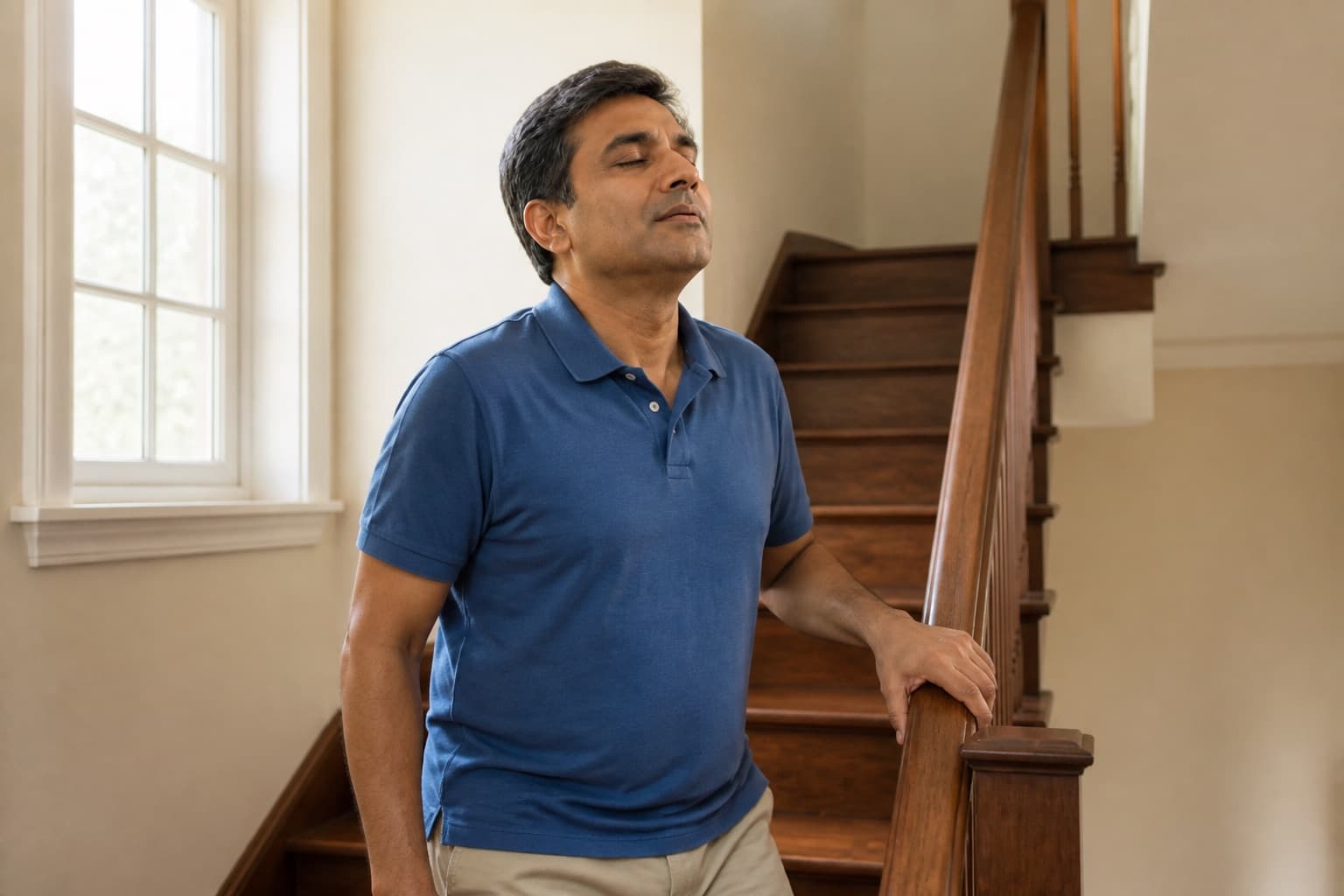
Chest pain occurring at rest, with new or worsening signs, or pain unrelieved by GTN needs an urgent assessment. This page is for patients managing stable, diagnosed angina under cardiac care.
What Is Angina and What Is Actually Causing It?
Angina is chest pain/discomfort that occurs when the heart muscle doesn't receive sufficient oxygen-rich blood. Stress, cold, and this condition are predictable and can be managed with medication. Unstable angina develops at rest and needs quick medical evaluation. Variant angina, caused by coronary artery spasm, is less common.
Atherosclerosis, by progressive accumulation of oxidised and inflamed plaque in the coronary arteries, is the inherent mechanism in most angina cases. What triggers atherosclerosis is what traditional cardiology appointments hardly examine:
Treating the symptoms without fixing such drivers means the disorder keeps progressing
- 01
Oxidative Stress
Ruins the endothelial lining of the coronary arteries and triggers LDL into the plaque lining of the coronary arteries
- 02
Nutritional Deficiencies
Omega-3, vitamin D, magnesium, and CoQ10 are relevant to cardiac functionality and arterial health development
- 03
Chronic Systemic Inflammation
Elevated fibrinogen, homocysteine, and hsCRP are cardiovascular risk markers that a standard lipid panel doesn't capture
- 04
Insulin Resistance and Metabolic Syndrome
Strongly related to triggered plaque formation and higher cardiac oxygen demand; hardly evaluated in regular cardiology follow-up
Why Is My Chest Pain on Exertion Still Not Controlled?
Taking cardiac medication and still experiencing exertional chest pain means something isn't properly cured. The medication controls the symptoms, but the disease drivers continue. Here are the key reasons angina stays poorly controlled despite effective treatment:
Consistent Systemic Inflammation
Increased hsCRP, Lp(a), and homocysteine trigger endothelial damage and unstable plaque even with optimum medical therapy
Insulin Resistance
Aggravates atherosclerosis and worsens myocardial oxygen requirements, as most cardiology reviews don't assess it
CoQ10 Deficiency
Statin utilization decreases CoQ10, that impair the heart's mitochondrial energy production and controls exercise tolerance
Magnesium Deficiency
Regulates coronary vasodilation and prevention of arterial spasm, as deficiency boosts anginal frequency
Cortisol and Stress Dysregulation
Chronic stress increases cardiac oxygen requirements, increases blood pressure, and maintains systemic inflammation
Gut Dysbiosis and TMAO
Some bacteria maintain systemic inflammation and transform dietary elements into TMAO that are directly related to atherosclerosis progression
What Does CLP Investigate that Cardiology Appointments Typically Don't?
Here are the things that Clinic Living Plus investigates that cardiology appointments usually don't:
- Inflammatory markers (hsCRP, oxidised LDL, Lp(a), fibrinogen, and homocysteine)
- Insulin resistance (Fasting insulin and HOMA-IR)
- Magnesium and CoQ10 levels, mainly in patients on statins
- Omega-3 and vitamin D index that are both related to cardiovascular inflammatory risks
- Gut health markers where TMAO-producing dysbiosis gets suspected
Root-cause protocol
Angina Treatment at CLP: Addressing the Root Drivers
TEST, NEVER GUESS
Advanced Cardiovascular Workup First
Homocysteine, HOMA-IR, Lp(a), CoQ10, oxidised LDL, magnesium, vitamin D, and omega-3 index before designing any protocol
PRECISION NUTRIENTS
Anti-inflammatory Dietary Protocol
Mediterranean diet, omega-3-rich foods, and elimination of refined carbs and heavy foods
SUSTAINABLE CHANGES
Targeted Supplementation from Laboratory Results
Vitamin K2+D3, omega-3, magnesium, CoQ10 and L-citrulline/L-arginine for endothelial and nitric oxide support
METABOLIC REPAIR
Insulin Resistance Fix
Lifestyle and dietary protocols; medication coordination with the physician where HOMA-IR gets elevated
ACCELERATE HEALING
IV Nutrition Therapy
All IV protocols get shared with a cardiologist before use — IV magnesium for vasodilation, IV B complex for mitochondrial support, and IV CoQ10 where oral intake isn't enough
REDUCE TOXIC LOAD
Chelation Therapy
EDTA chelation to relieve heavy metal burden (mercury, cadmium, and lead); destroys and relieves the endothelial lining, triggers plaque formation, and is available for the right cardiac patients in association with the cardiologist
OXYGEN UTILISATION
Ozone therapy (Major Autohemotherapy)
Available at CLP as a supportive treatment modality that improves systemic oxygen utilisation, relieves oxidative stress, and supports endothelial function. It is used with the full functional medicine protocol, and not as a standalone intervention
BUILD CARDIAC STRENGTH
Personal Fitness Training
Medically controlled cardiac rehab, including resistance training and aerobic conditioning, suited to the patient's existing cardiac condition (one of the strongest evidence-based interventions for controlling anginal frequency and is coordinated with the cardiology team)
FUNCTIONAL RECOVERY
Physiotherapy
Cardiac physiotherapy (including functional movement evaluation, posture correction, breathing mechanics and graded mobilisation) focused on smooth functional recovery after diagnosis and closely coordinated with the cardiologist
PRIORITISE MENTAL HEALTH
Stress Management and Psychological Support
Chronic psychological stress spikes cortisol, cardiac oxygen demand and platelet accumulation, and maintains systemic inflammation that is addressed via structured stress reduction methods as a part of the wholesome functional medicine programme
Angina Treatment Without Surgery: What CLP Offers and What is Realistic
Whether it requires surgery, angioplasty, bypass, or stenting is a cardiologist's choice depending on coronary anatomy, risks, and symptom criticality. Clinic Living Plus doesn't recommend surgery where it is clinically demanded.
Here are the areas where Clinic Living Plus' approach stays relevant for patients managing angina without any surgery
Where CLP's approach is relevant for patients managing angina without surgical intervention:
Stable angina on medical therapy
Clinic Living Plus fixes the metabolic and inflammatory drivers that medications don't target, and controls the progressive burden on the coronary arteries
Post-stent patients
Surgery cures the blockage, but not the disease process. Clinic Living Plus's approach combats the risk of progression after stenting/bypass
Patients who are not surgical candidates
Clinic Living Plus improves all modifiable inflammatory and metabolic factors within those constraints
Honest framing
We aim to slow disease progression, control symptom frequency, and increase exercise tolerance, however not to reverse arterial blockages
“Cardiology manages the blockage. What functional medicine addresses is why the blockage formed and what is driving it to progress. Those are different questions — and both matter for the patient living with angina.”
Take The First Step Today
For first time clients, please call us to schedule an appointment.
+91 72931 11120Schedule My Angina ConsultationBook a Consultation Today
Schedule Your Consultation
Are you suffering from stable angina and controlling symptoms without anyone examining what is triggering the disease? At Clinic Living Plus in Bangalore, we started with a comprehensive inflammatory assessment and met later with cardiac care, but not a replacement for assessment. Book a Consultation at Clinic Living Plus in Bangalore. We focus on comprehensive inflammatory and cardiac care assessment to identify and fix the issues.
Prefer to talk now
Take The First Step Today
For first time clients, please call us to schedule an appointment.
3rd Floor, 1655, 27th Main Rd, opp. NIFT College, HSR Layout, Bengaluru 560102
Mon–Sun, 9:00 am – 8:00 pm