
Free Health Tool
TDEE Calculator
Your TDEE (total daily energy expenditure) is the number of calories your body burns in a full day: at rest, digesting food, exercising and simply moving around.
Most online calculators are built on equations and activity data from Western populations. This one also shows the ICMR-NIN 2020 reference for Indian adults, so you get a realistic starting point.


TDEE Energy Calculator
Calculate your daily energy expenditure and personalised calorie targets for weight loss, maintenance or muscle gain.
Awaiting your inputs
Fill in your details and press Calculate TDEE to see your daily burn and calorie targets.
What is TDEE and how is it different from BMR?
BMR (basal metabolic rate) is what your body burns lying completely still. TDEE adds everything else you do in a day on top of that. BMR is the biggest share, but the parts you control are digestion, exercise and everyday movement.
BMR
≈ 60–70%
The energy your body uses at complete rest to breathe, pump blood and keep you warm.
Digesting food
≈ 10%
The thermic effect of food: the cost of digesting and absorbing what you eat. Protein costs the most.
Exercise
≈ 5–10%
Planned workouts. Smaller than most people expect, even with a daily gym habit.
Everyday movement
Varies most
NEAT: walking, standing, chores, fidgeting. It can differ by hundreds of calories between two similar people.
How many calories do you burn on a day when you don't exercise?
More than you might think. Even on a rest day you burn your full BMR plus the cost of digesting meals and every step you take.
That is why the activity level you choose matters so much. Pick the level that describes a normal week, not your best one. Two people with the same job can still differ by several hundred calories a day simply through how much they walk and stand.
Mifflin-St Jeor or Harris-Benedict: which one should you use?
Both estimate BMR from weight, height, age and sex. Harris-Benedict dates from 1919 (revised in 1984). Mifflin-St Jeor (1990) is generally considered the more accurate of the two for people today, and it is the one this calculator uses.
Mifflin-St Jeor · used here
Men: 10W + 6.25H − 5A + 5
Women: 10W + 6.25H − 5A − 161
Harris-Benedict (revised)
Men: 13.397W + 4.799H − 5.677A + 88.362
Women: 9.247W + 3.098H − 4.330A + 447.593
W = weight in kg, H = height in cm, A = age in years. Result in kcal/day.
Why might a global TDEE calculator overestimate for an Indian body?
Because both halves of the calculation were built on Western data.
The resting half
BMR equations were developed largely from European and American volunteers. At the same weight and BMI, many Indian adults carry more body fat and less muscle, and muscle is what drives resting burn. So the equation can predict a higher BMR than an Indian body actually has.
The activity half
The activity multipliers also come mostly from Western studies. When ICMR-NIN revised its guidance in 2020 using Indian data, the recommended daily energy for adults came out lower than in its earlier 2010 guidance. Real daily movement, not the label on a dropdown, is what decides the number.
ICMR-NIN 2020 energy requirements for Indian adults
| Group and work category | Reference weight | Energy per day | Per kg per day |
|---|---|---|---|
| Men, sedentary work | 65 kg | 2,110 kcal | 32 kcal |
| Men, moderate work | 65 kg | 2,710 kcal | 42 kcal |
| Men, heavy work | 65 kg | 3,470 kcal | 53 kcal |
| Women, sedentary work | 55 kg | 1,660 kcal | 30 kcal |
| Women, moderate work | 55 kg | 2,130 kcal | 39 kcal |
| Women, heavy work | 55 kg | 2,720 kcal | 49 kcal |
Source: ICMR-NIN, Nutrient Requirements for Indians, 2020. Use these as a check on any calculator result, not as a personal target.
Questions worth asking
What activity level should I choose if I have a desk job?
Pick Sedentary if you mostly sit and do little planned exercise. Choose Lightly active only if you also exercise 1–3 times a week or walk a lot during the day. Most people overestimate their activity, and choosing a level too high is the most common reason a calculator's number feels too generous.
What is NEAT and how much does it change my day?
NEAT (non-exercise activity thermogenesis) is the energy you spend moving without exercising: walking to the shop, climbing stairs, cooking, standing, even fidgeting. It varies more between people than any other part of TDEE, so adding steps and standing time is one of the easiest ways to raise your daily burn.
How do I use my TDEE to lose weight?
Eat a little below it. A daily deficit of about 250–500 kcal is a common, sustainable starting point. Keep protein up and include strength training so the weight you lose is mostly fat, then adjust based on your actual progress over two to three weeks rather than chasing the number on any single day.
Why did my TDEE go down after I lost weight?
A smaller body needs less energy to run and to move around, so your TDEE falls as you lose weight. Losing muscle lowers it further. Recalculate after every few kilos lost, and protect muscle with protein and resistance training.
Does TDEE really change as I get older?
Yes, gradually. The equations reduce BMR with age, mostly reflecting the loss of muscle and lower activity that often come with it. Staying strong and active slows this down considerably.
Is my smartwatch measuring my TDEE?
It estimates it. Watches combine your profile with heart rate and movement, and their calorie figures can be off, particularly for exercise. Treat the watch and this calculator as two estimates, and let your weight trend over a few weeks tell you which is closer.
How accurate is a TDEE calculator?
It gives a good starting estimate, not an exact figure. Equations predict averages, and individuals vary because of body composition, hormones, thyroid function, sleep and medicines. If your weight is not responding as expected, a doctor-led assessment can check the reasons.
Should I go by my TDEE or by the ICMR figure?
Use both as a range. The ICMR-NIN figures were set for Indian adults and are often lower than results from global calculators. Starting nearer the lower number and adjusting from real results is a sensible approach.
The Bottom Line
A TDEE calculator gives you a starting estimate. For Indian adults, compare it with the ICMR-NIN reference and lean towards the lower figure, then let a few weeks of real results guide you. If your weight isn't responding the way the numbers say it should, hormones, thyroid, insulin resistance, sleep or medicines may be part of the picture, and that is what a doctor-led assessment looks at.
Start Free AssessmentVerified Google Reviews
The number on the scale is just the beginning
01 / 18
The team who gets you there
Doctors, nutritionists and nurses who know your case from day one and stay with you until the end.

Dr. Tejas Udayanand
MBBS, MSc SEM

Roshni Sanghvi
Registered Holistic Nutritionist

Sowmya C
IV Nurse Practitioner (ND)
Medical Disclaimer
This calculator and article are for general education and are not a substitute for medical advice, diagnosis or treatment. The figures are estimates based on population equations and published reference values. Speak to a qualified doctor or registered dietitian before making significant changes to your diet, particularly if you have diabetes, a thyroid disorder, PCOS, heart disease, kidney disease, an eating disorder, or are pregnant or breastfeeding.
Expert Insights on Weight and Metabolism
July 24, 2026
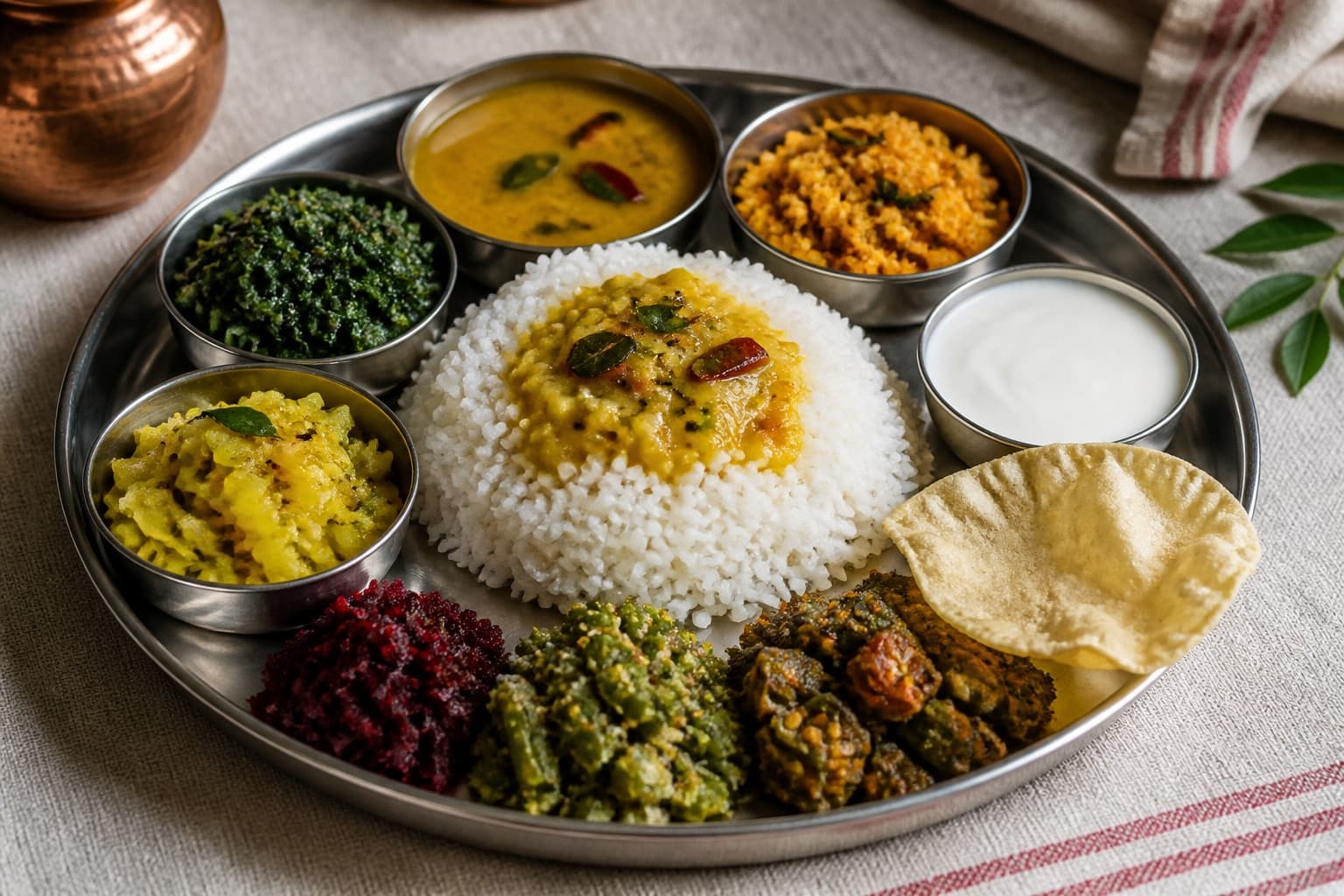
GLP-1 Indian Diet Guide: What to Eat on Semaglutide
Rice, roti, dal, sabzi and curd — traditional Indian food is compatible with semaglutide when the plate is built the right way.

July 24, 2026
Weight Loss Injection vs Diet and Exercise: What Actually Works?
Semaglutide as a weight loss injection has grown widely available — so how does it actually compare with diet and exercise alone?
July 24, 2026
Do You Regain Weight After Stopping Semaglutide?
Semaglutide has been growing in demand among people with obesity looking to lose their excess weight — but what happens once the course ends?