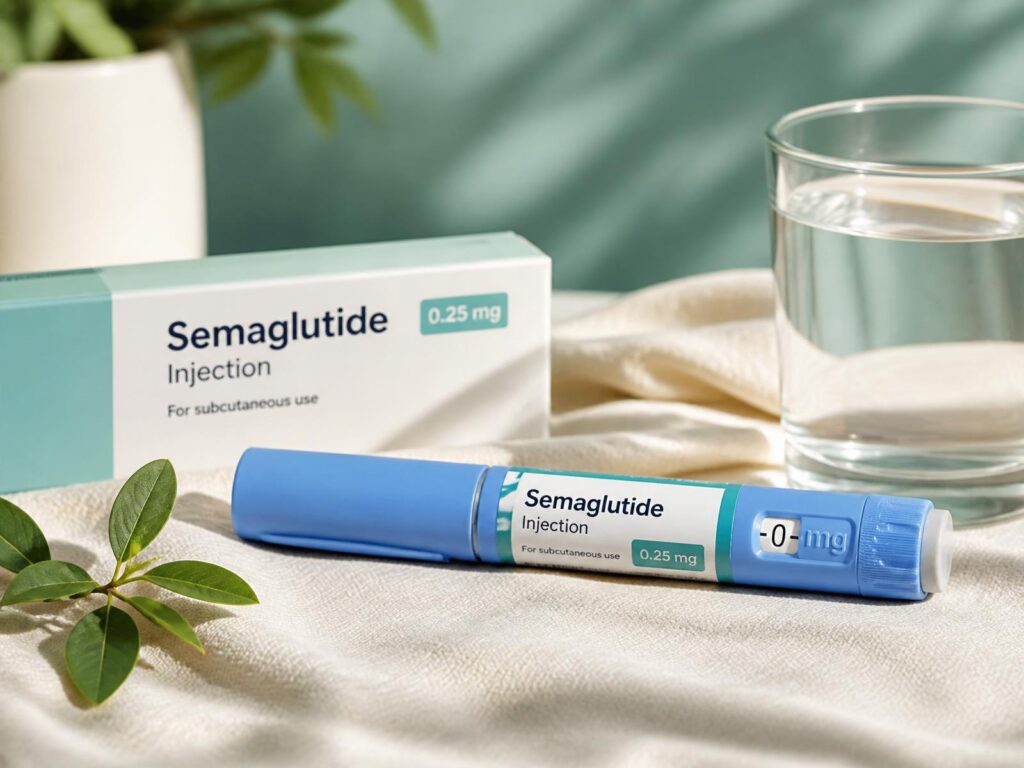
Clinical Guide

Semaglutide Side Effects: what to expect, what to watch, and when to call your doctor.

Semaglutide can cause side effects — mostly in the first weeks and around dose increases. Most are gastrointestinal and temporary. This guide tells you what to expect, which symptoms need a doctor’s attention, and how to minimise discomfort throughout treatment.

Doctor’s note — Slow, supervised titration is the cornerstone of GI tolerability.

01 — Mechanism

Why semaglutide causes side effects

Semaglutide acts on the brain and on GLP-1 receptors across the body. Those receptors sit in the gut wall, the pancreas, the liver, and the kidneys. Activating them simultaneously produces a wide range of physiological changes — most of them intentional, some of them felt as side effects.

The gastrointestinal effects — nausea, vomiting, diarrhoea — happen because the medicine slows gastric emptying. Food stays in the stomach longer, which reduces hunger effectively but also causes discomfort, especially in the early weeks.

Effects peak during dose increases, before your body has adjusted to the new level. That is exactly why the recommended titration schedule — starting low and increasing slowly — exists. Rushing the dose is the single most common cause of avoidable side effects.

02 — Common effects

Gastrointestinal side effects — the most frequent, and the most manageable.

Semaglutide (Ozempic and Wegovy) slows stomach emptying, so GI symptoms are expected. They are usually manageable, temporary, and significantly reduced with a proper titration protocol and dietary adjustments.

Practical management

These side effects don’t mean semaglutide isn’t working, or that you should stop. Consult your doctor before making any changes to your dose.

03 — Less common

Beyond the gut — other effects worth knowing.

These effects are less frequent than GI symptoms but worth understanding so you know what is normal, what to monitor, and when to flag something.

Injection Site Reactions

Mild swelling, itching or redness at the injection site — usually self-resolving. Rotating sites keeps each area from becoming sensitised.

Headache

Reported more often than placebo in trial data, mainly during the early weeks of treatment.

Fatigue

Some patients feel fatigued in the first weeks. It is more often tied to reduced caloric intake than to the drug itself.

Increased Heart Rate

A small rise in resting heart rate of about 1–4 bpm on average. Discuss with your doctor if you have pre-existing cardiac conditions.

"Ozempic Face"

Rapid fat loss can change facial volume. It is not a medical complication and is not specific to Ozempic — any large weight loss can cause it.

04 — Red flags

Serious side effects — when to seek immediate medical attention.

These effects are rare but serious. Recognising them early is the difference between a manageable situation and a medical emergency.

Pancreatitis

Severe, persistent abdominal pain radiating to the back. Stop the medication and seek immediate medical attention.

Thyroid Tumours (MTC)

A personal or family history of medullary thyroid carcinoma or MEN2 is a contraindication. Discuss this before starting.

Kidney Problems

Severe vomiting or diarrhea can cause dehydration and worsen kidney function. Seek care if urine output decreases.

Gallbladder Disease

Rapid weight loss increases gallstone risk. Report persistent right-sided abdominal pain or nausea after fatty meals.

Allergic Reaction

Rash, swelling of the face or throat, or difficulty breathing. Stop the medication immediately and call emergency services.

Vision Changes

Diabetic retinopathy can temporarily worsen early on. Contact your ophthalmologist if you notice sudden vision changes.

05 — Higher risk

Who is at higher risk of side effects?

A thorough medical review before starting semaglutide is not optional — it decides whether the medication is right for you and at what dose.

06 — What actually helps

How to reduce semaglutide side effects

Most side effects are manageable. These evidence-based steps are the same ones our clinical team gives every patient on day one.

“Gradual, supervised dose titration is the cornerstone of managing gastrointestinal tolerability. Start low, go slow.”

— Clinical perspective, CLP

07 — The case for supervision

Why medical supervision changes the outcome.

Riya Sharma, 42, bought unregulated semaglutide online to skip the clinic waitlist. Without guidance on dose escalation, she started at a higher dose and was hospitalised with severe nausea and dehydration within two weeks.

After discharge she moved onto a medically supervised programme. Her physician set the right dose, monitored her labs and adjusted the protocol when needed. She finished her programme without further incident.

Patients who experience the worst semaglutide side effects are usually those who self-source it, start at the wrong dose, or have no one to call when things go wrong.

At Clinic Living Plus, we don’t prescribe semaglutide without a full clinical evaluation. Our doctors review your history, screen for contraindications and stay available throughout.

08 — FAQ

Questions patients ask us most.

GI side effects are strongest in the first 1–3 months and around dose increases. Most patients improve significantly at a stable dose. Serious effects are rare and resolve when the medication is stopped under medical guidance.

Yes. Nausea affects roughly 44% of patients on semaglutide versus 16% on placebo. It is a direct consequence of slowed gastric emptying. It does not mean the medication is wrong for you — it means your body is adjusting.

For most patients, yes. Nausea is most intense during the first weeks and after each dose increase, then eases considerably as your body adjusts. Slow, supervised dose titration is the most reliable way to prevent it.

Pancreatitis, thyroid tumours (in people with a relevant history), gallbladder disease, severe hypoglycaemia (mainly when combined with insulin or sulfonylureas), and kidney problems from dehydration. These are rare but require immediate medical attention.

Semaglutide itself does not directly damage kidneys. However, severe vomiting or diarrhoea can cause dehydration that worsens pre-existing kidney disease. Patients with kidney conditions need closer monitoring throughout treatment.

Stopping abruptly does not cause a dangerous withdrawal effect, but weight tends to return relatively quickly without a transition plan. Always discuss stopping with your doctor — there may be a better approach than a hard stop.

Some anti-nausea medications are compatible, but do not self-prescribe. Certain antiemetics interact with other conditions or medications. Check with your prescribing doctor before adding anything to your regimen.

We start with a full clinical evaluation to rule out contraindications. We use a slow titration protocol, schedule regular check-ins for the first 12 weeks, and keep our doctors available between appointments if problems arise. Patients who follow the protocol have significantly lower rates of discontinuation.

Bооk а Cоnsultаtiоn Tоdаy

Schedule Your Consultation

* Required fields. We’ll contact you within 24 hours.
Weight loss on semaglutide is genuine, achievable and clinically evidenced — but results follow the quality of the programme around the medication. Get a proper evaluation before you start.

See what real weight loss looks like for your case.

Call Us

+91 72931 11120

Email

info@Cliniclivingplus

Location

HSR Layout, Bengaluru, Karnataka 560102

Hours

Mon-Sun: 9:00 AM - 7:00 PM

Book My Psoriasis Consultation

Book My Fatty Liver Consultation

Book My Gut Health Consultation

Book Your Weight loss Consultation

Book Your Weight loss Consultation

Add Your Heading Text Here​

Your transformation starts here

Sign up to Book a Consultation!

Sign up to Book a Consultation!

Sign up to Book a Consultation!

Sign up to Book a Consultation!

Sign up to Book a Consultation!

Sign up to Book a Consultation!